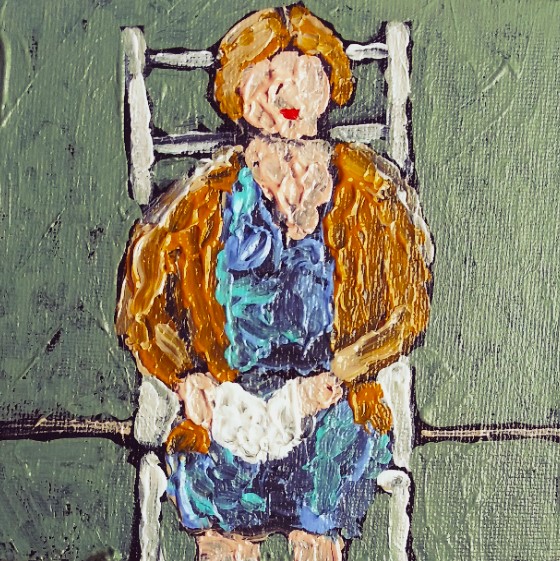
Tony Gloeggler






Honestly
To pass the hours I spend
by her bedside, I ask mom
a lot of questions, some dumb
to make her laugh about farts
on elevators, falls in hotel halls,
her famous poor eyesight,
walking into wrong bathrooms,
setting her beehive hair-do
on fire with her lit cigarette.
Anything to take her mind
off her pain, a breath
from boredom. Some questions
uncover things I never knew
or remind me of a few
I’ve forgotten: Uncle Dom
coming over on the boat
from Italy without polio,
Cousin Louie, who I never
liked, losing his leg in the war,
Grandpa’s arranged marriage
back in Naples, sneaking
away after he met his bride,
Sunset Pool, the roaring lions
pouring water out of their mouths,
the Sunday I nearly drowned,
Dad giving me mouth to mouth.I’ll place a bowl of Cheez-Its
in her lap, drop a Milk Dud
or Jordan Almond, spoon melon
into her mouth. Sometimes
I’ll ask who’s her funniest,
prettiest friend, her smartest
kid, press her for the truth,
ask what she remembered
about my girlfriends. Julia
the most beautiful, Helen’s
bright blue eyes, the perfect
mother for Jesse, but Erica
was the one for me. Right
on all three. I’ll ask what
she likes most about each
of her kids. When she gets
to me, she says honesty.In between, my sister
comes down. We switch
mom’s position, clean
her ass after she craps,
sponge bathe her, apply
creams and baby powder
as she screams and cries
we’re killing her, she’s cold,
cover her, hurry, help her,
over and over and I’ll say
I’m sorry, we’re doing all
we can. Finally, calm again,
we’ll talk about dinner, baked
ziti, cheese macaroni, a stromboli,
all recent favorites. As the sun
goes down, she grows irrational,
more fearful, asks me to stay.
I say I’ve been here all day,
explain I’ll be back Saturday
and she’ll tell me she never
knew I could be so mean,
that nobody cares about her,
nobody does anything for her,
nobody has any compassion,
I only come out of obligation,
that I’m so happy to be going
home. I lean over, kiss her,
tell her I’ll be back before
she knows, get some sleep,
and leave.First published in Heavy Feather
Going And Coming
Ever since I started going to
and coming home from dialysis,
I’ve waved or stopped to talk
to the people sitting out front.
They started wishing me
a good day and added god
bless after I disappeared
for a week five years ago,
explained kidney transplant
when I returned. I nod, keep
quiet, knowing it would be
easier to believe in god
if the world wasn’t a complete
mess, the guys from the group
home weren’t irreparably
damaged at birth and yes
if god had decided to bless
me before kidney disease
took over my life. If there’s
a master plan, it feels like
the perfect time for plan B
or maybe a new, improved god.One guy is always there. I never
remember his name and I’m too
embarrassed to ask a third time.
He was a bartender, but never
talks about sports or music,
women walking by, just weather.
Going, he saw me bent, doubled
over with deep, gut-wrenching coughs;
coming back, walking faster, hoping
a dizzy spell wouldn’t hit me mid-stride.
He pets any dog that swaggers by,
flatters the owner and sing songs
that’s my boy in a soft Abba chorus
while I move away, remember
straddling the top of a schoolyard
fence, swinging a stickball bat
at a German, foaming at the mouth,
Shepherd, snapping at my dangling
feet and then watching the dog
chew up a five-year-old standing
by the water fountain, his mom
screaming, running toward him.Instead of bringing that up, I think
about hot dogs, two for a dollar
from back in the old days, bought
from one of those umbrella’d carts,
one with mustard and sauerkraut,
the other topped by a sweet brown
onion sauce, a quarter for an orange
or grape soda, and my father talking
about quitting his warehouse job,
dreaming of owning his own. This guy
marked my progress, looking better
the first few months of recovery,
filling out my drawn-in, sunken face,
discarding the cane, walking steadier
until I passed my peak, and old age
caught up, dragged me downhill,
my face puffier in some places,
sagging in others, balding faster,
while he uses a walker these days
with a thin oxygen wire strapped
to his nose and sticks to enjoy
your day Tony, smiles, nods.If I knew his name I’d stop, lean
over, say it looks like rain,
whisper, I bet I live longer
than him even If I’m not sure
I’ll want to, or what a lovely,
breezy, not too hot morning
to think about everything
we'll miss. When a son and his Dad
walk by wearing matching soccer
jerseys, I’ll bring up fathers, mine
retiring from the warehouse, dying
five years later, never holding
two of his grandkids; his, a Korean
War casualty he only knew through
photographs, his mother’s stories
or maybe just the Yankee–Red Sox
weekend series, the wild card race,
constant neighborhood construction.
We’ll shake our heads or laugh, throw
them back like whiskey shots, as if all
the time in the world was ours to kill.First published in 12 Mile Review
Left Behind
These mornings, you’re not sure
what will wake you first:
the smell of cigarette smoke
sifting through a window screen,
the hushed voices of men
in hard hats sipping coffee
or the high-pitched beep beep
of trucks backing down streets.
You roll out of bed, click off
the alarm a half hour before
it rings. By the time you start
to brush your teeth, jack
hammers are digging deeper
to build higher and keep pace
with rising rents, the changing
neighborhood. It’s easy to think
of the late 70’s and your grandfather,
the last white man left standing
in Bed Stuy, sitting at the head
of the table with his hands clasped
as if in prayer talking about
his long-gone days, complaining
about the coloreds taking over
and your god damn long hair.You recognize fewer and fewer
people as you walk the ten blocks
to the subway. No need to nod
hello, stop and talk with anyone.
Almost overnight, everyone’s grown
younger, thinner, richer, whiter
and they all own dogs or nannies
who push strollers built like tanks.
You miss the corner candy store,
the Deli next door and its thick
Italian heroes. The newsstand
still guards the subway entrance.
You went to school with the owner
and you’re both scarred by the names
of nuns and Franciscan Brothers
who tried and failed to beat
any sense into you. Head down,
Tom’s changing a creased twenty
licking his ink stained fingers.
You’re staring at beautiful women
as they buy bottled water, check
cell phones and text messages
to men and boys nothing like you.Was it the day before yesterday
or as far back as twenty years ago
that you could slam that window
shut and return to bed, lie with Erica,
Suzanne or Helen and the only things
that entered your mind were breakfast,
whether the local theater was showing
the movie you were dying to see
or maybe you would quietly get up,
step across the room and put on
some sweet soulful morning music
and do it all blessed day long?
She’d rest her head against your
chest, play with your softening cock
and you’d talk about schoolyard days,
books, songs, hitchhiking cross country,
the first time you almost had sex
and how you could stay here forever.
You’d laugh, whisper and sometimes
talk out loud about building your own
world, how everything would fall
into place gracefully, never thinking
about your grandfather easing closer
to death, afraid of feeling left behind.
First published in The Ledge
Tony Gloeggler is a life-long resident of NYC who managed group homes. Poems have recently appeared in Rattle, BODY, Vox Popu. His collection, What Kind Of Man, with NYQ Books was a finalist for the 2021 Paterson Poetry Prize and his new book Here On Earth came out 1/26 with NYQ Books.